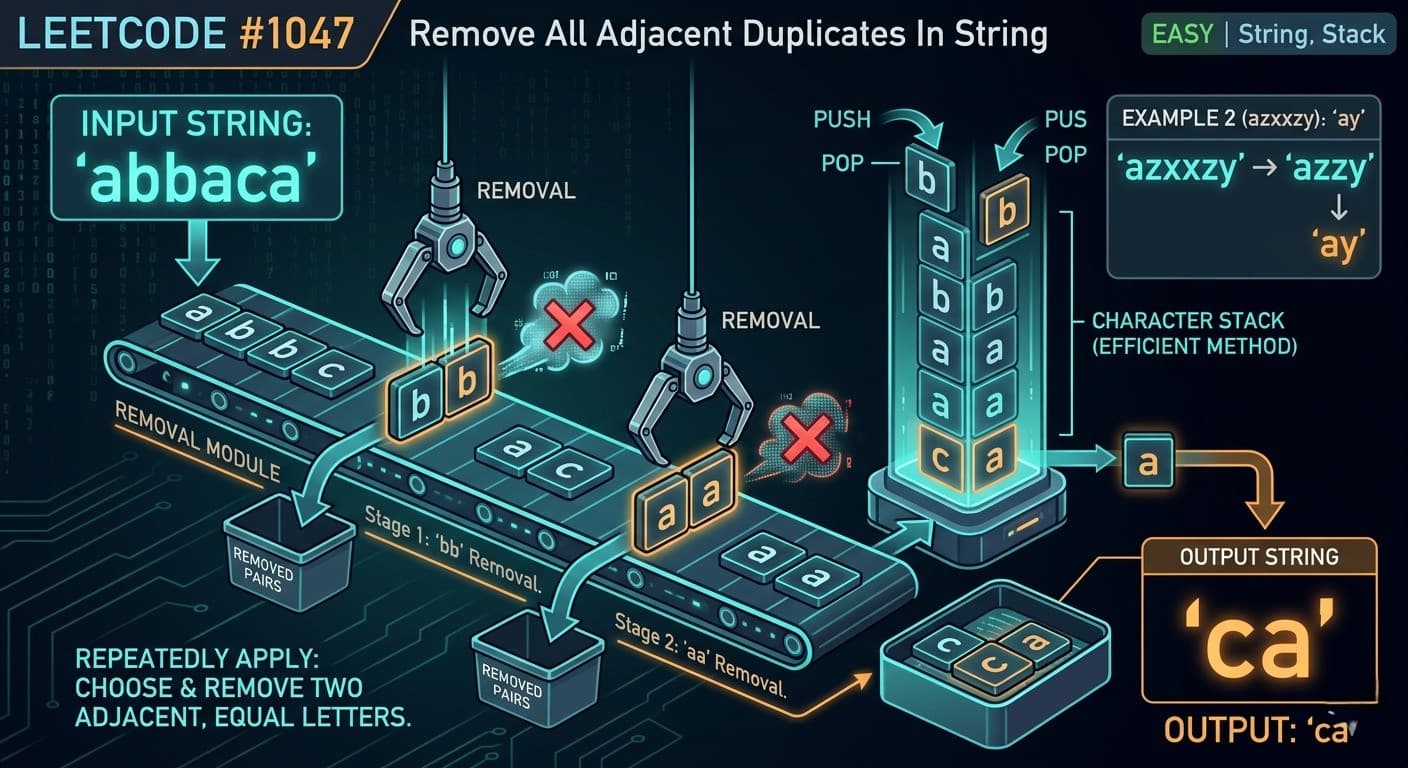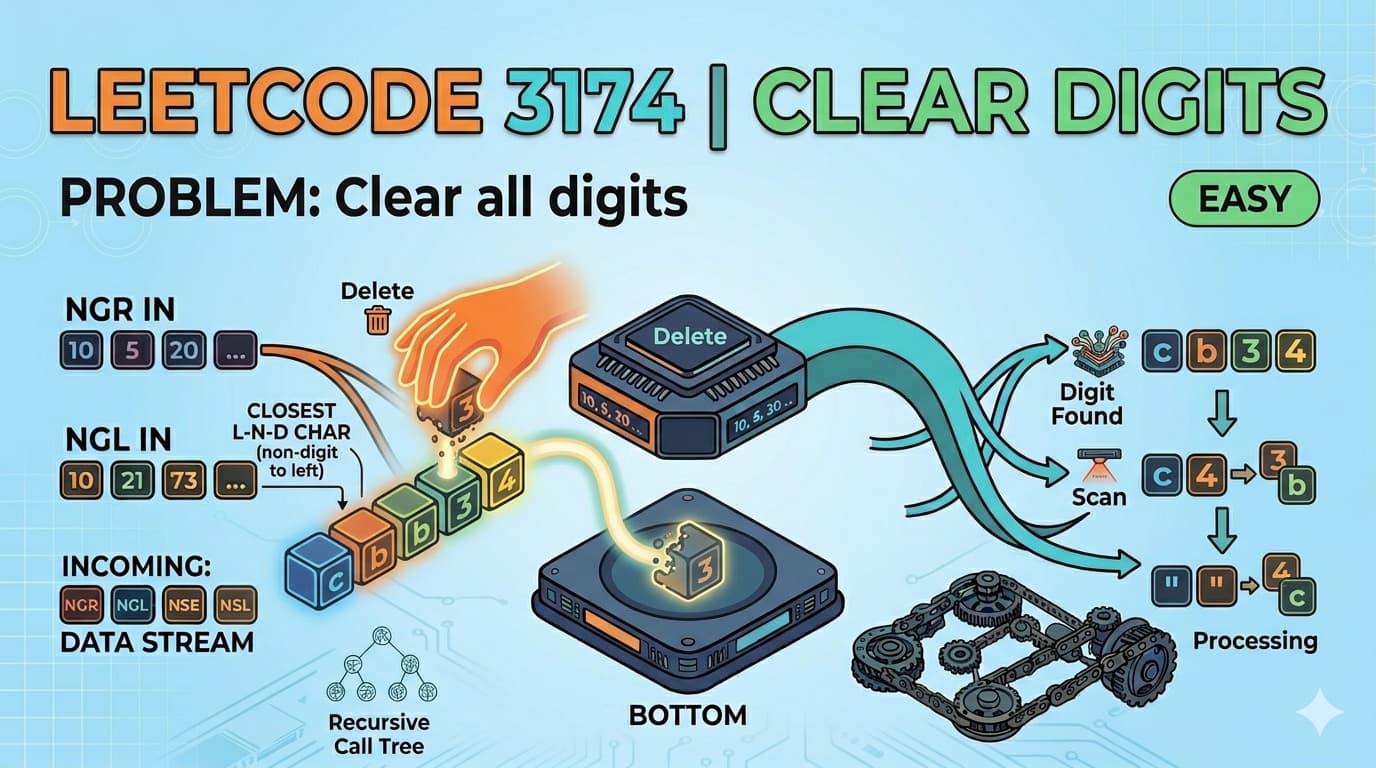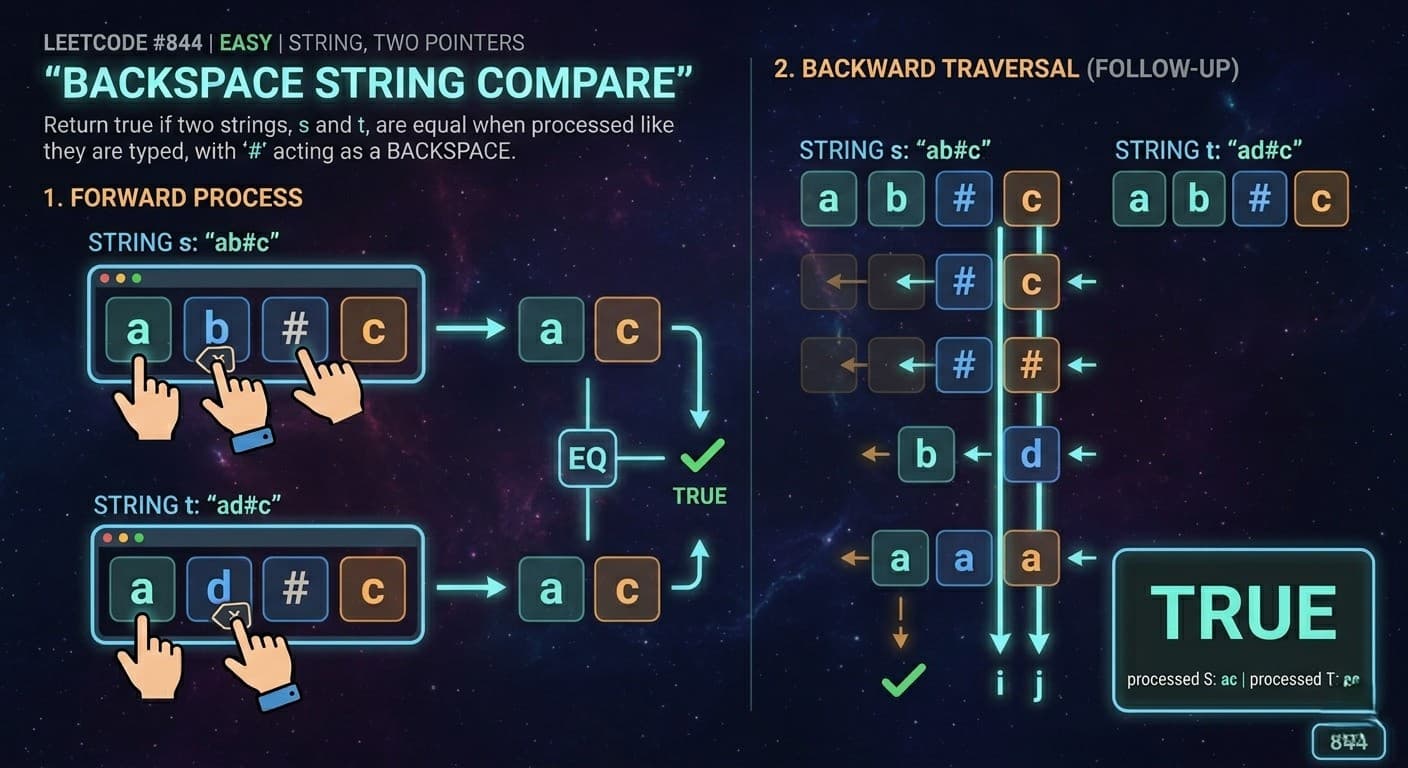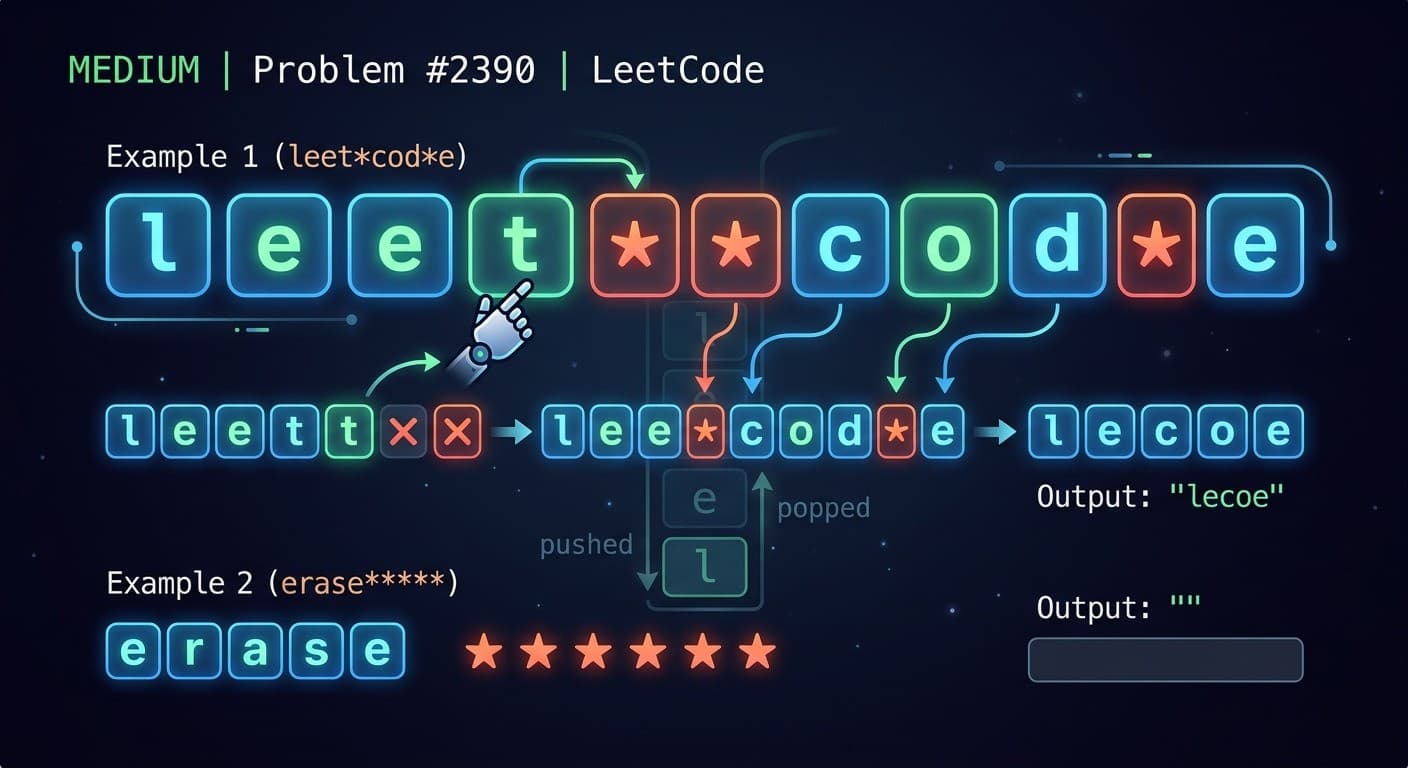
Introduction
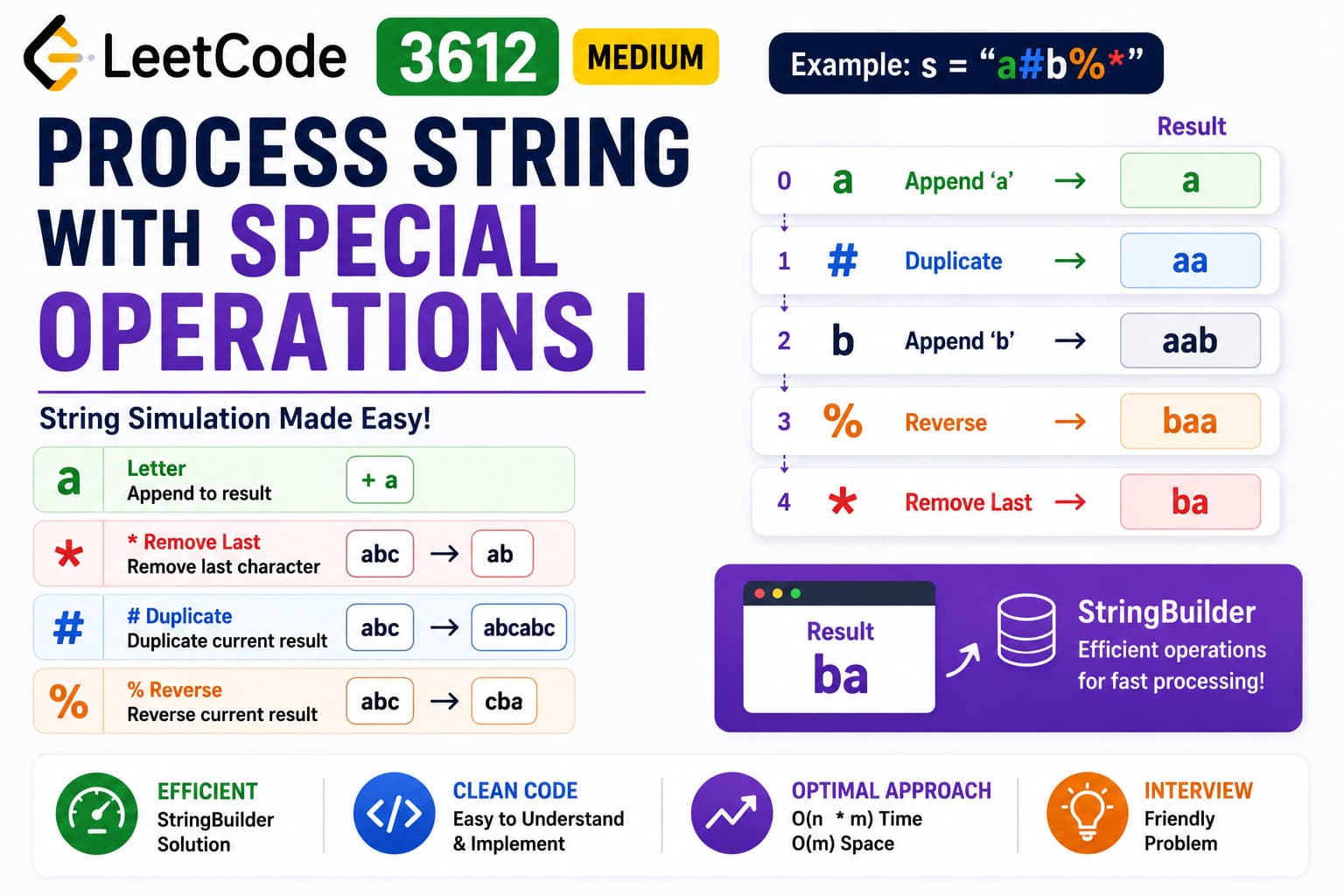
LeetCode 3612, Process String with Special Operations I, is an excellent string simulation problem that tests your ability to process characters sequentially while maintaining a dynamic result string.
The challenge introduces three special operations:
*→ Delete the last character#→ Duplicate the current string%→ Reverse the current string
Although the problem appears simple, it teaches an important interview concept:
Simulate operations exactly as described while efficiently modifying a string.
In this article, we'll break down the intuition, explore the optimal approach, perform a dry run, and analyze the time and space complexity.
Problem link :- Process String with Special Operations I
Problem Statement
You are given a string s containing:
- Lowercase English letters
*#%
Process the string from left to right according to the following rules:
Lowercase Letter
Append it to the result.
Asterisk (*)
Remove the last character if one exists.
becomes
Hash (#)
Duplicate the current string.
becomes
Percent (%)
Reverse the current string.
becomes
Return the final string after processing all characters.
Example 1
Input
Step-by-Step Execution
| Character | Operation | Result |
| a | Append | a |
| # | Duplicate | aa |
| b | Append | aab |
| % | Reverse | baa |
| * | Remove last | ba |
Output
Key Observation
The operations always modify the current result.
We need a data structure that supports:
Append
Delete Last Character
Reverse
Duplicate
A StringBuilder supports all of these efficiently.
This makes it the perfect choice for the problem.
Approach 1: StringBuilder Simulation
Intuition
Process each character one by one.
If it is a letter
Append it.
If it is *
Delete the last character.
If it is
Duplicate the entire current string.
If it is %
Reverse the current string.
Continue until all characters are processed.
Java Solution
Dry Run
Input
Step 1
Result:
Step 2
Result:
Step 3
Result:
Step 4
Duplicate:
Step 5
Reverse:
Final Answer:
Why StringBuilder Is Better Than String
Suppose we use:
Every append creates a brand-new string.
For large inputs this becomes inefficient.
StringBuilder modifies the same object in memory.
Benefits:
- Faster append
- Faster deletion
- Built-in reverse operation
- Lower memory overhead
This is why StringBuilder is the preferred interview solution.
Complexity Analysis
Let:
Time Complexity
Append
Delete Last
Reverse
where m is current result length.
Duplicate
because the entire string is copied.
Overall:
In this problem:
so this is perfectly acceptable.
Alternative Approach: Using a Stack
Another way is storing characters inside a stack.
Advantages:
- Easy handling of
* - Natural last-in-first-out behavior
Disadvantages:
- Reversing becomes expensive
- Duplicating requires rebuilding data
Therefore, StringBuilder remains the cleaner solution.
Interview Discussion
A common interview follow-up is:
Why not use String?
Because Strings are immutable.
Every operation like:
creates a new object.
StringBuilder avoids repeated object creation and is significantly more efficient.
Edge Cases
Case 1
Process:
Output:
Case 2
Output:
Reversing an empty string changes nothing.
Case 3
Output:
Nothing exists to delete.
Key Takeaways
- StringBuilder is ideal for string simulation problems.
- Process operations strictly from left to right.
append(),deleteCharAt(), andreverse()make implementation simple.- Always look for mutable string structures when frequent modifications are required.
- Simulation problems often test implementation accuracy more than algorithmic complexity.
Conclusion
LeetCode 3612: Process String with Special Operations I is a clean simulation problem that demonstrates how powerful StringBuilder can be for handling dynamic string transformations.
By processing each character sequentially and applying the required operation immediately, we can solve the problem efficiently with a straightforward and readable solution.
This problem is an excellent exercise for improving string manipulation skills and understanding when to choose mutable data structures over immutable strings.