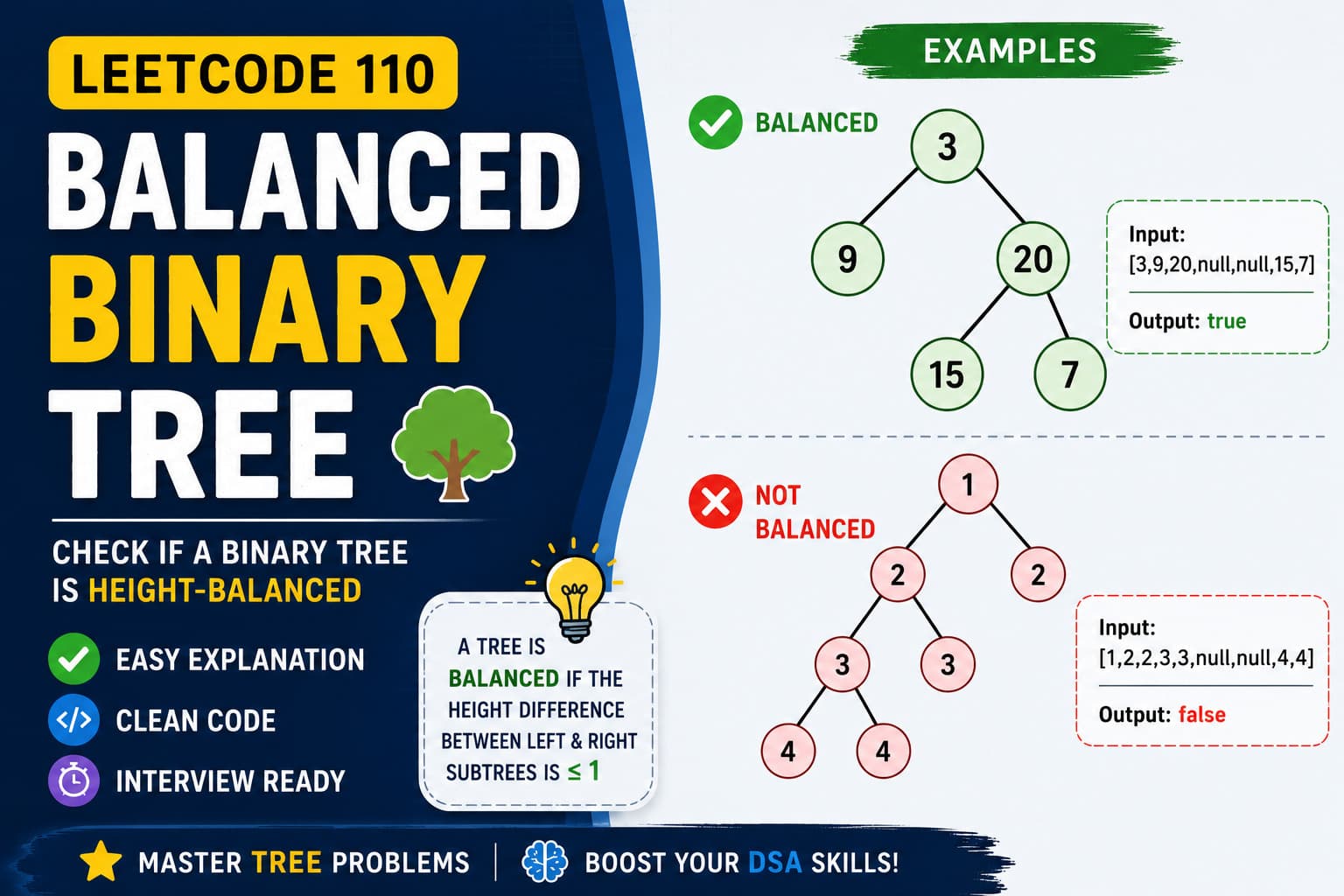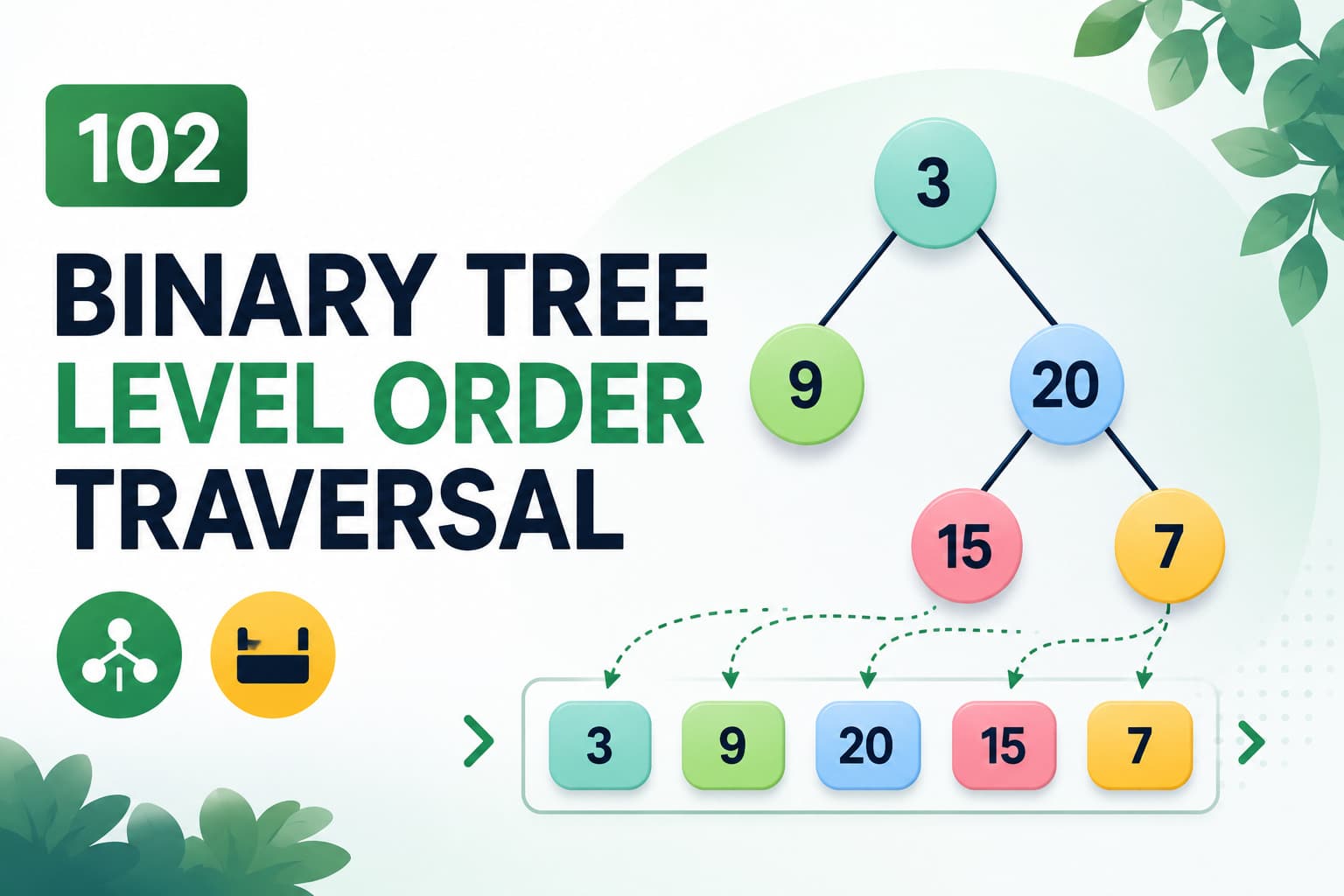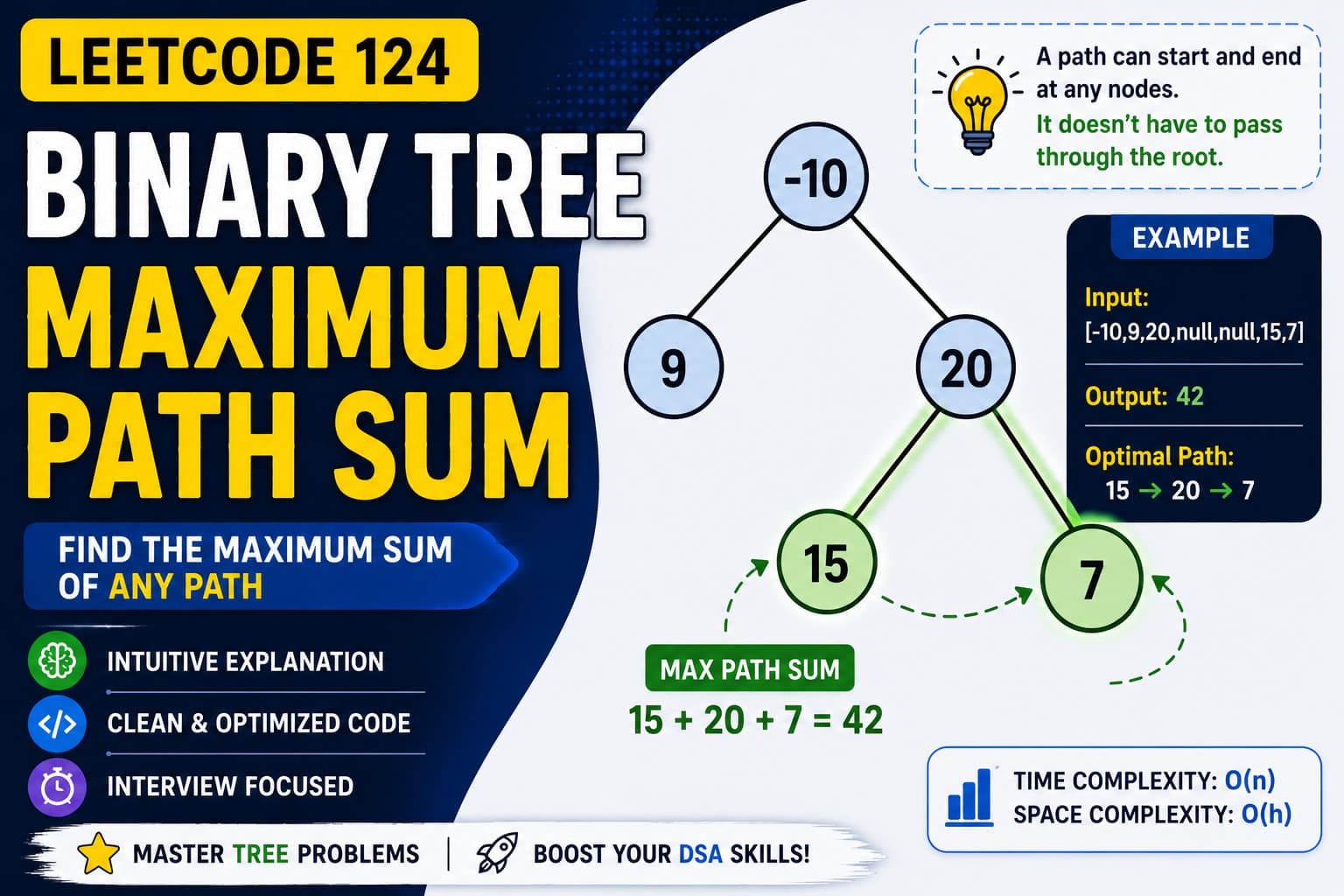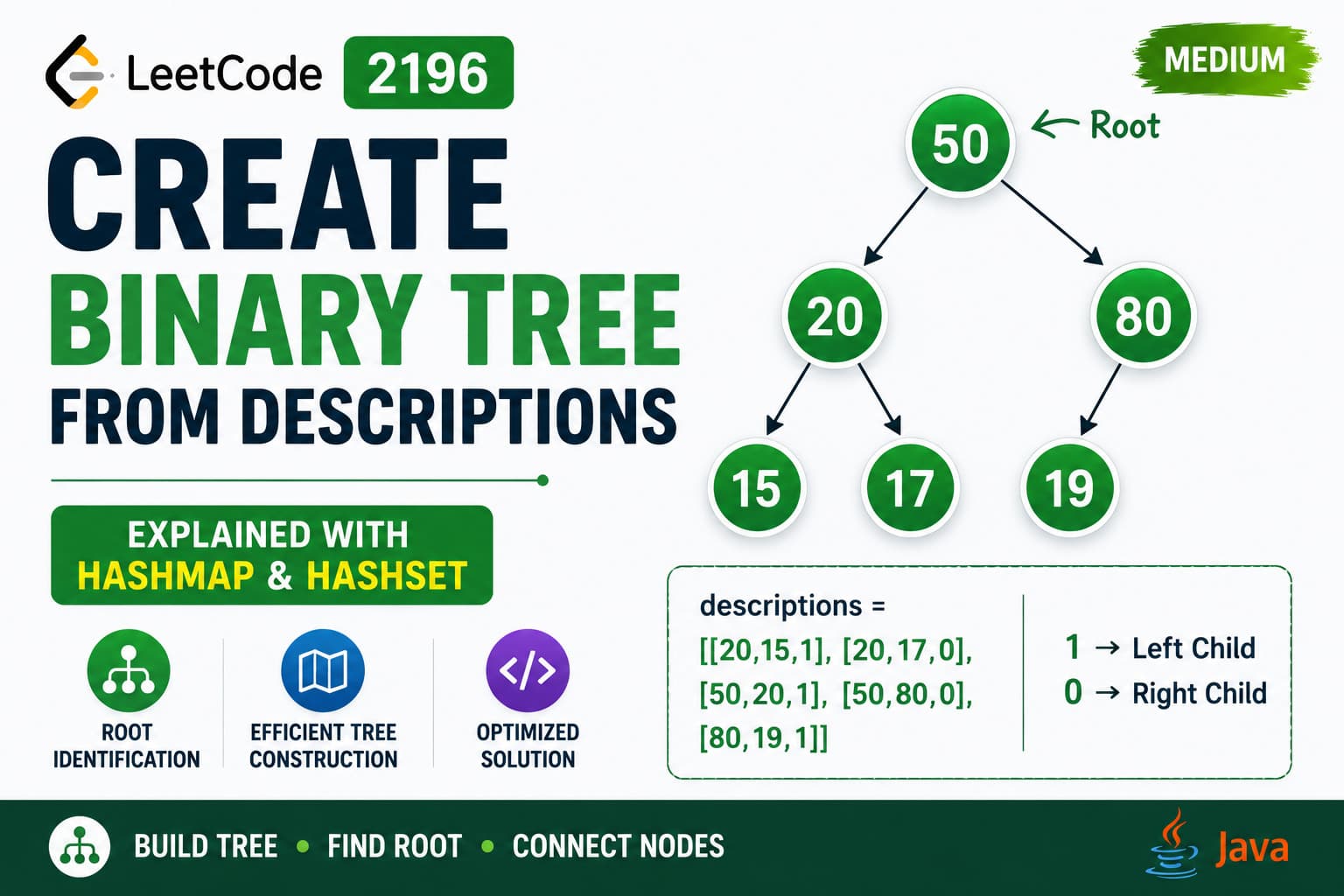
LeetCode 104: Maximum Depth of Binary Tree – Java Recursive Solution Explained
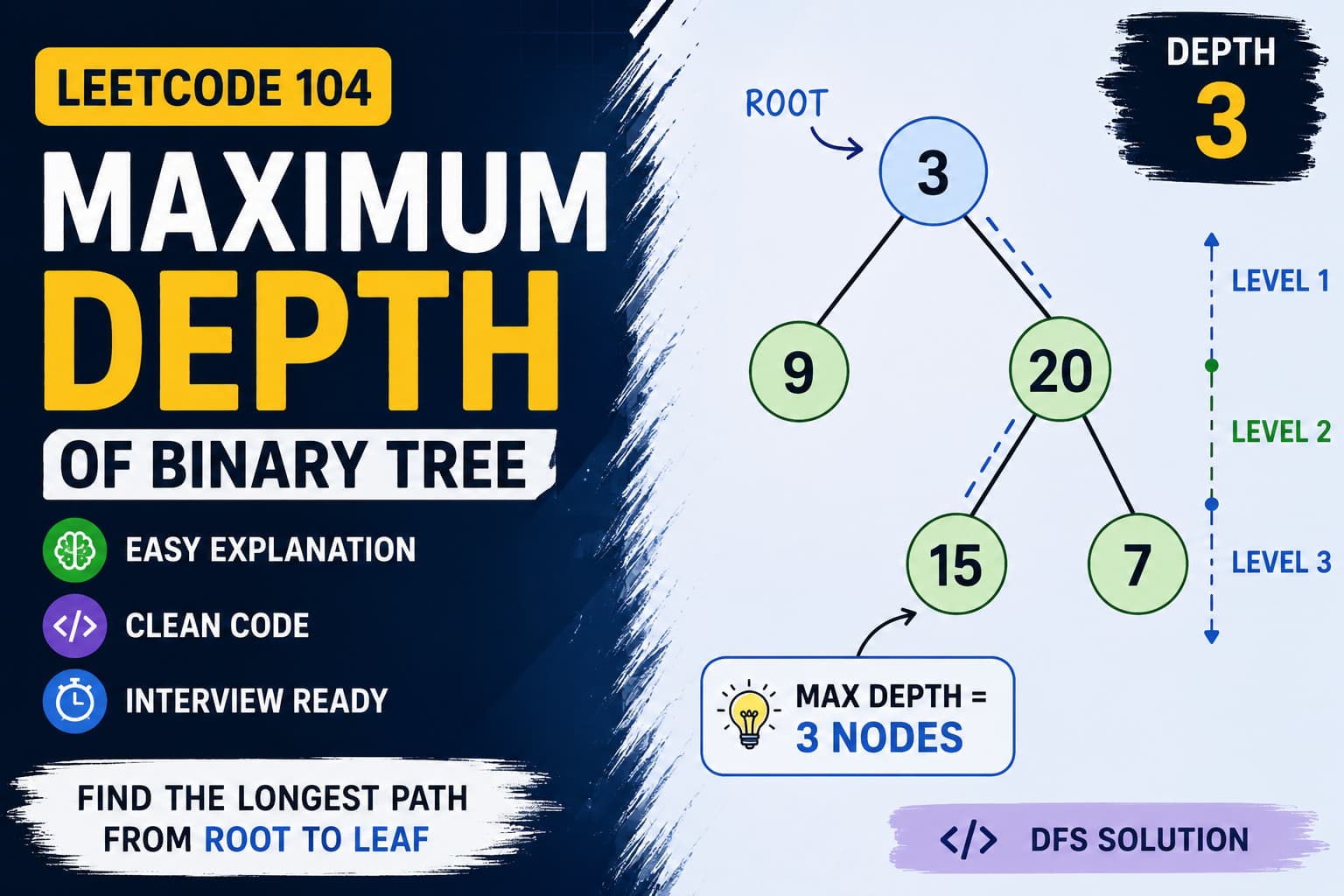
IntroductionLeetCode 104 – Maximum Depth of Binary Tree is one of the most important beginner tree problems in Data Structures and Algorithms.This problem teaches:Binary Tree TraversalDepth First Search (DFS)RecursionTree Height CalculationDivide and ConquerIt is one of the most frequently asked tree questions in coding interviews because it builds the foundation for:Tree recursionHeight problemsBalanced tree problemsDiameter problemsDFS traversalIf you are starting binary trees, this is one of the best problems to master first.Problem Link🔗 https://leetcode.com/problems/maximum-depth-of-binary-tree/Problem StatementGiven the root of a binary tree:Return:Maximum depth of the treeMaximum depth means:Number of nodes along the longest path from root to the farthest leaf node.Example 1Inputroot = [3,9,20,null,null,15,7]Tree: 3 / \ 9 20 / \ 15 7Output3Explanation:Longest path:3 → 20 → 15contains:3 nodesExample 2Inputroot = [1,null,2]Tree:1 \ 2Output:2Understanding Maximum DepthDepth means:How many levels exist in the treeFor example: 1 / \ 2 3 / 4Levels:Level 1 → 1Level 2 → 2,3Level 3 → 4Maximum depth:3Key ObservationThe depth of a tree depends on:Maximum depth of left subtreeandMaximum depth of right subtreeSo:Depth(root)=1 + max(leftDepth, rightDepth)This is the core recursive formula.Recursive IntuitionAt every node:Find depth of left subtreeFind depth of right subtreeTake maximumAdd current nodeThis naturally becomes a recursive DFS problem.Java Recursive Solutionclass Solution { public int maxDepth(TreeNode root) { if(root == null) return 0; int left = maxDepth(root.left); int right = maxDepth(root.right); return 1 + Math.max(left, right); }}Why This WorksAt every node:Recursively calculate left depthRecursively calculate right depthChoose bigger depthAdd:1for current node.This continues until leaf nodes.Dry RunInput 3 / \ 9 20 / \ 15 7Step 1Start from root:3Step 2Left subtree:9Depth:1Step 3Right subtree:20Its children:15 and 7Depth becomes:2Step 4At root:1 + max(1,2)Result:3Recursive Call FlowmaxDepth(3) ├── maxDepth(9) │ ├── 0 │ └── 0 │ └── maxDepth(20) ├── maxDepth(15) └── maxDepth(7)Then values return upward.Alternative BFS ApproachWe can also solve this using:Level Order Traversalusing a queue.Every level increases depth by:1BFS Java Solutionclass Solution { public int maxDepth(TreeNode root) { if(root == null) return 0; Queue<TreeNode> queue = new LinkedList<>(); queue.offer(root); int depth = 0; while(!queue.isEmpty()) { int size = queue.size(); for(int i = 0; i < size; i++) { TreeNode node = queue.poll(); if(node.left != null) queue.offer(node.left); if(node.right != null) queue.offer(node.right); } depth++; } return depth; }}DFS vs BFSApproachTechniqueSpaceDFSRecursionO(H)BFSQueueO(N)Time Complexity AnalysisRecursive DFS SolutionTime ComplexityO(N)because every node is visited once.Space ComplexityO(H)where:H = tree heightWorst case:O(N)for skewed tree.BFS SolutionTime ComplexityO(N)Space ComplexityO(N)queue may contain full level.Interview ExplanationIn interviews, explain:The depth of a node depends on the maximum depth between its left and right subtree. This naturally forms a recursive divide-and-conquer problem.This demonstrates:Tree recursion understandingDFS traversal knowledgeDivide and conquer thinkingCommon Mistakes1. Forgetting Base CaseAlways handle:if(root == null) return 0;2. Using Min Instead of MaxWe need:Longest pathnot shortest.3. Incorrect Depth CountingRemember to add:1for current node.FAQsQ1. What is maximum depth?It is the number of nodes in the longest root-to-leaf path.Q2. Why is recursion preferred?Tree problems naturally fit recursive structures.Q3. Can this be solved iteratively?Yes.Using BFS with queue.Q4. Is this problem important for interviews?Very important.It is one of the most fundamental tree recursion problems.Related ProblemsAfter mastering this problem, practice:Minimum Depth of Binary TreeBalanced Binary TreeDiameter of Binary TreeBinary Tree Level Order TraversalPath SumConclusionLeetCode 104 is one of the most important beginner binary tree problems.It teaches:Recursive DFSTree height calculationDivide and conquerBinary tree traversalThe key insight is:Maximum depth equals 1 + maximum depth of left and right subtree.Once this recursive pattern becomes clear, many advanced tree problems become easier to solve.