Introduction
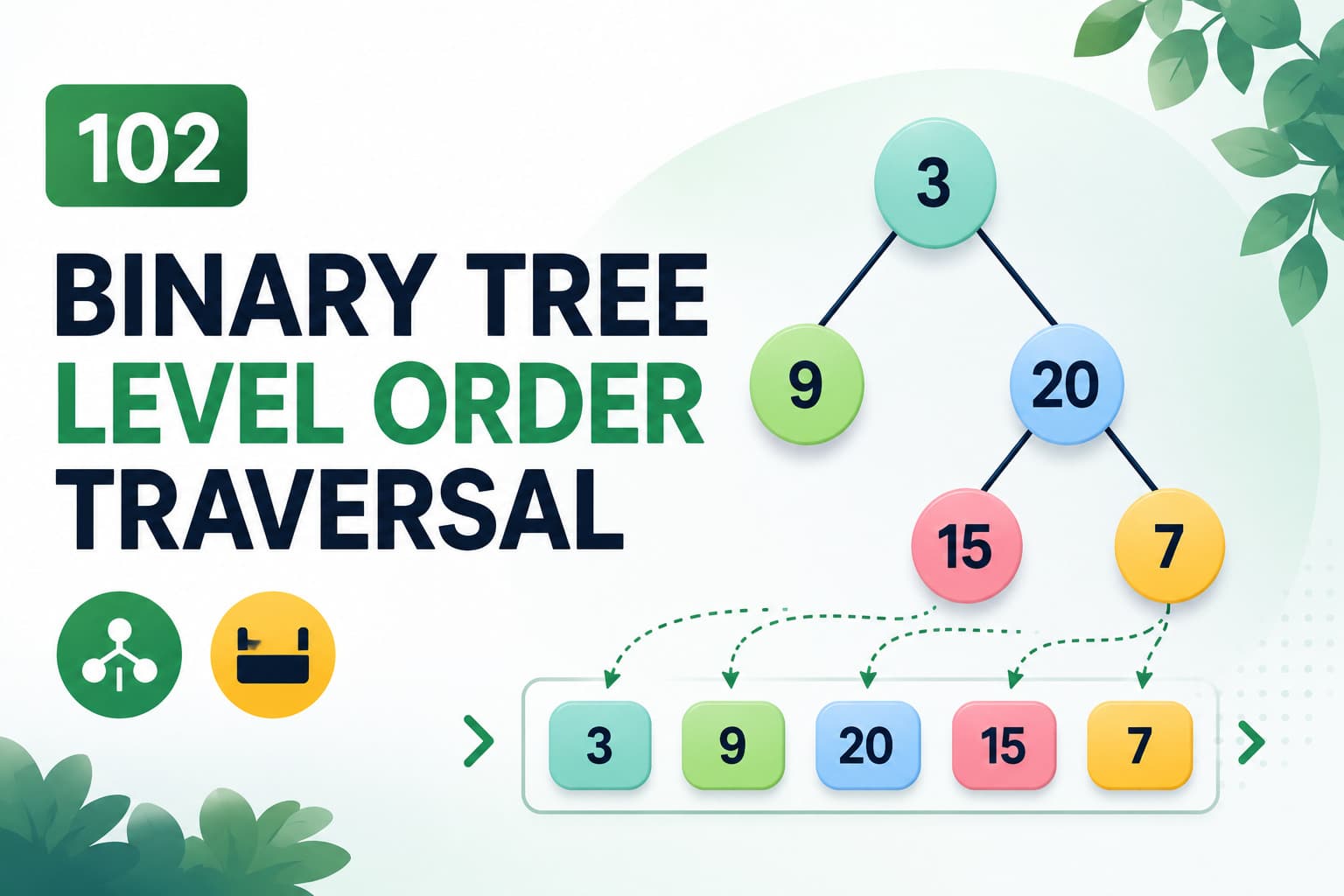
LeetCode 102 – Binary Tree Level Order Traversal is one of the most important Binary Tree traversal problems for coding interviews.
This problem introduces:
- Breadth First Search (BFS)
- Queue data structure
- Level-by-level traversal
- Tree traversal patterns
- Interview-level BFS thinking
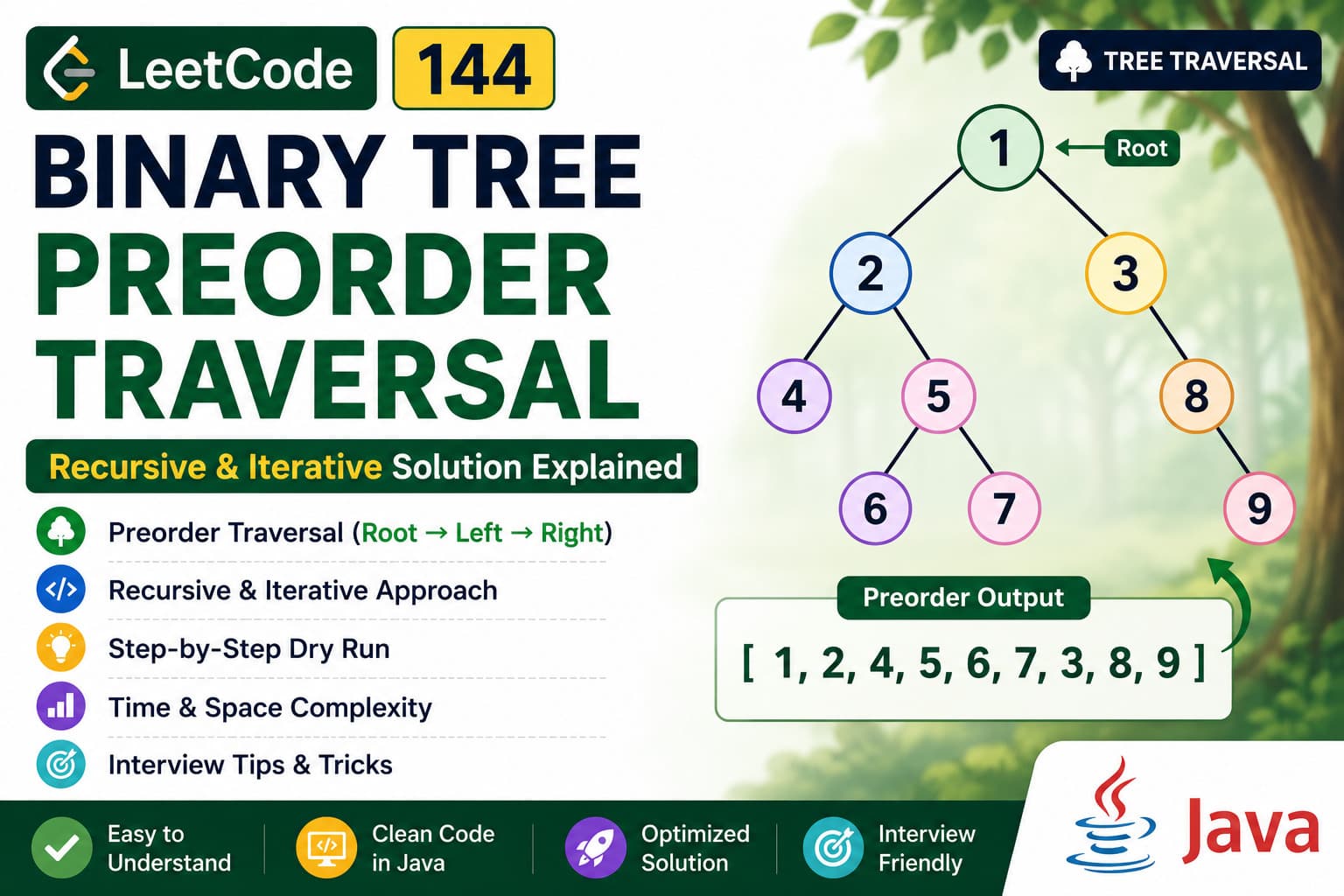
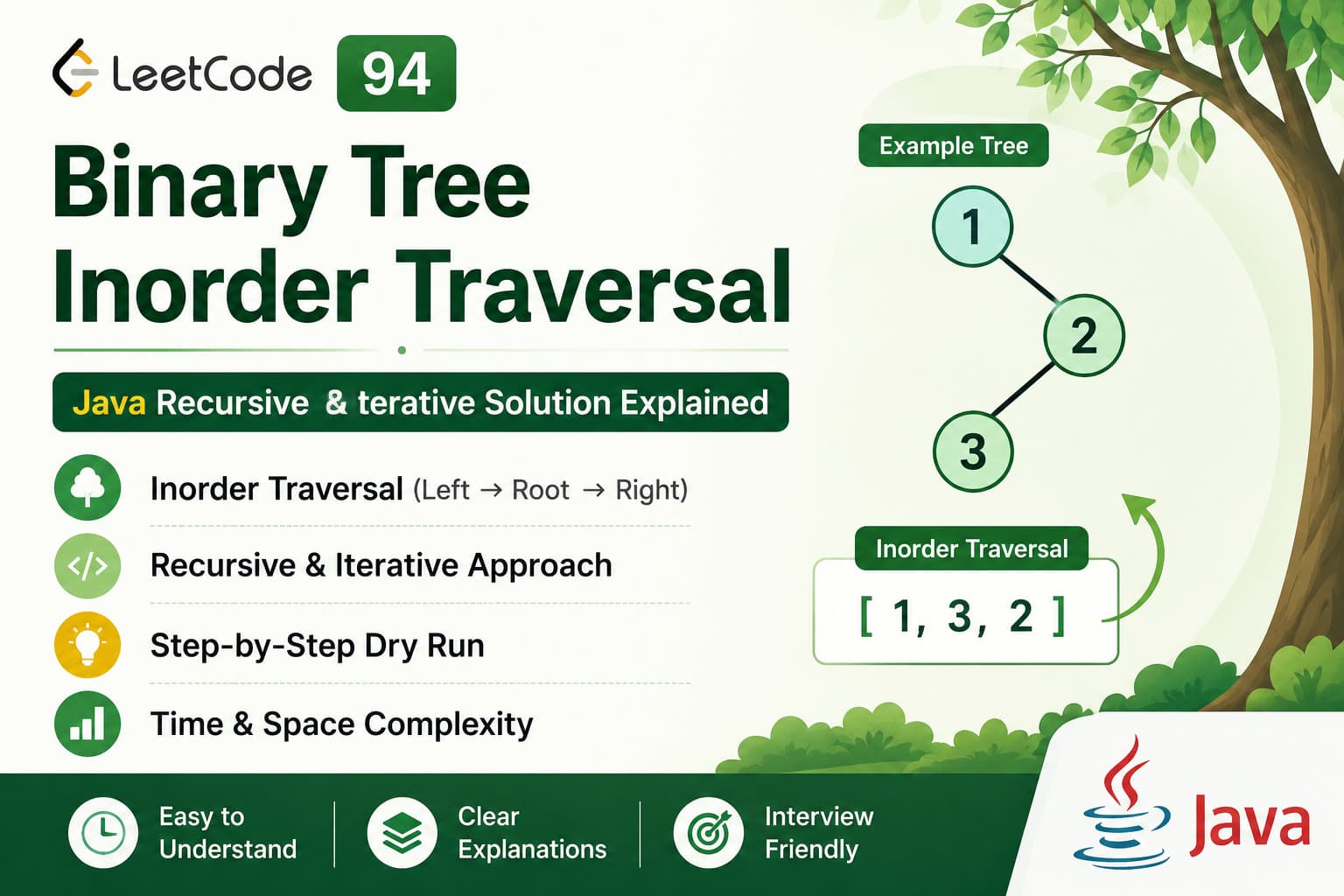
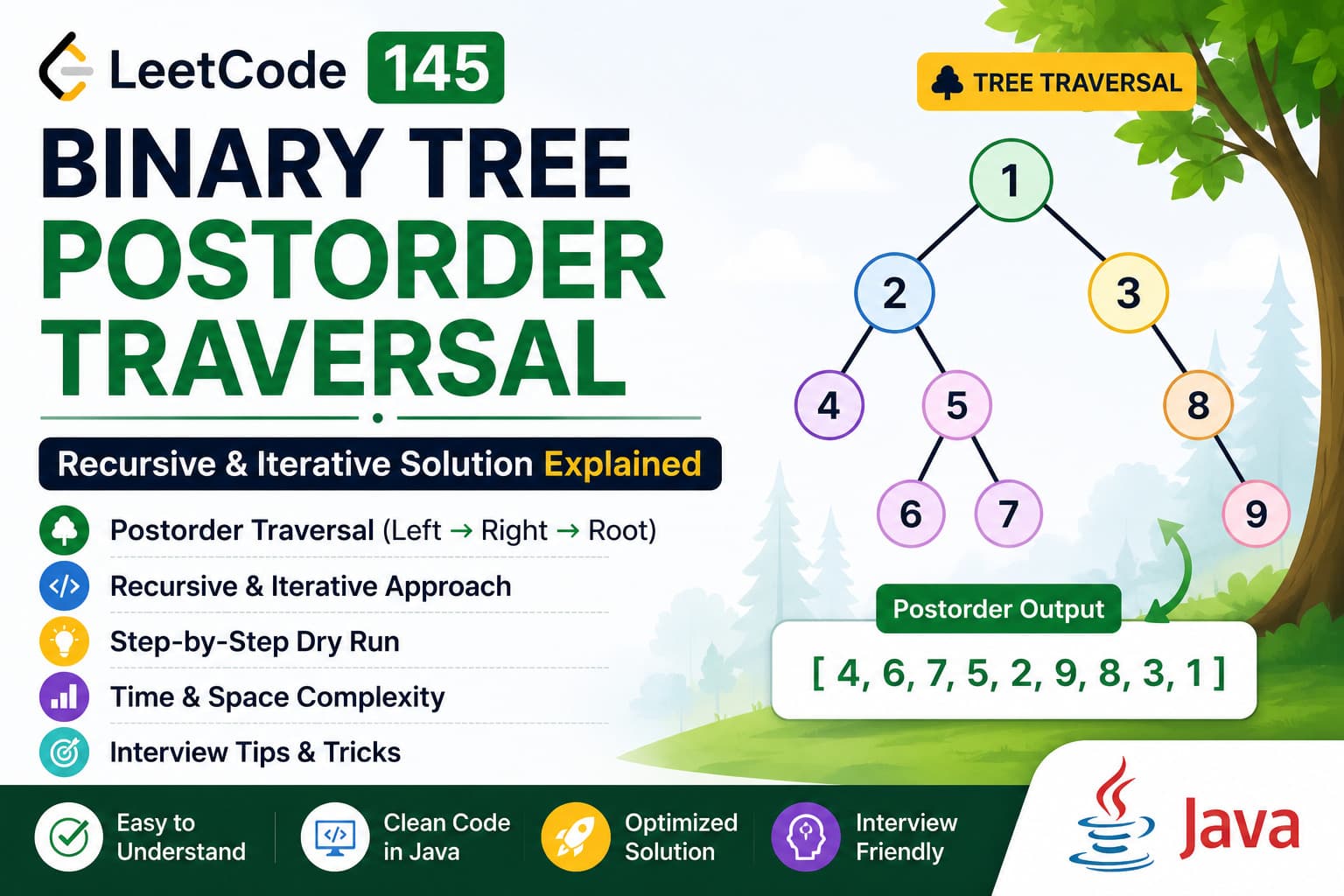
Unlike DFS traversals like preorder, inorder, and postorder, this problem explores the tree level by level.
This traversal is widely used in:
- Graph traversal
- Shortest path problems
- Tree serialization
- Zigzag traversal
- BFS-based interview questions
Problem Link
🔗 https://leetcode.com/problems/binary-tree-level-order-traversal/
Problem Statement
Given the root of a binary tree, return the level order traversal of its nodes' values.
Traversal should happen:
Example
Input
Tree Structure:
Level Order Traversal
Level 1:
Level 2:
Level 3:
Final Output:
Understanding the Problem
The main challenge is:
Process nodes level by level.
This is exactly what:
is designed for.
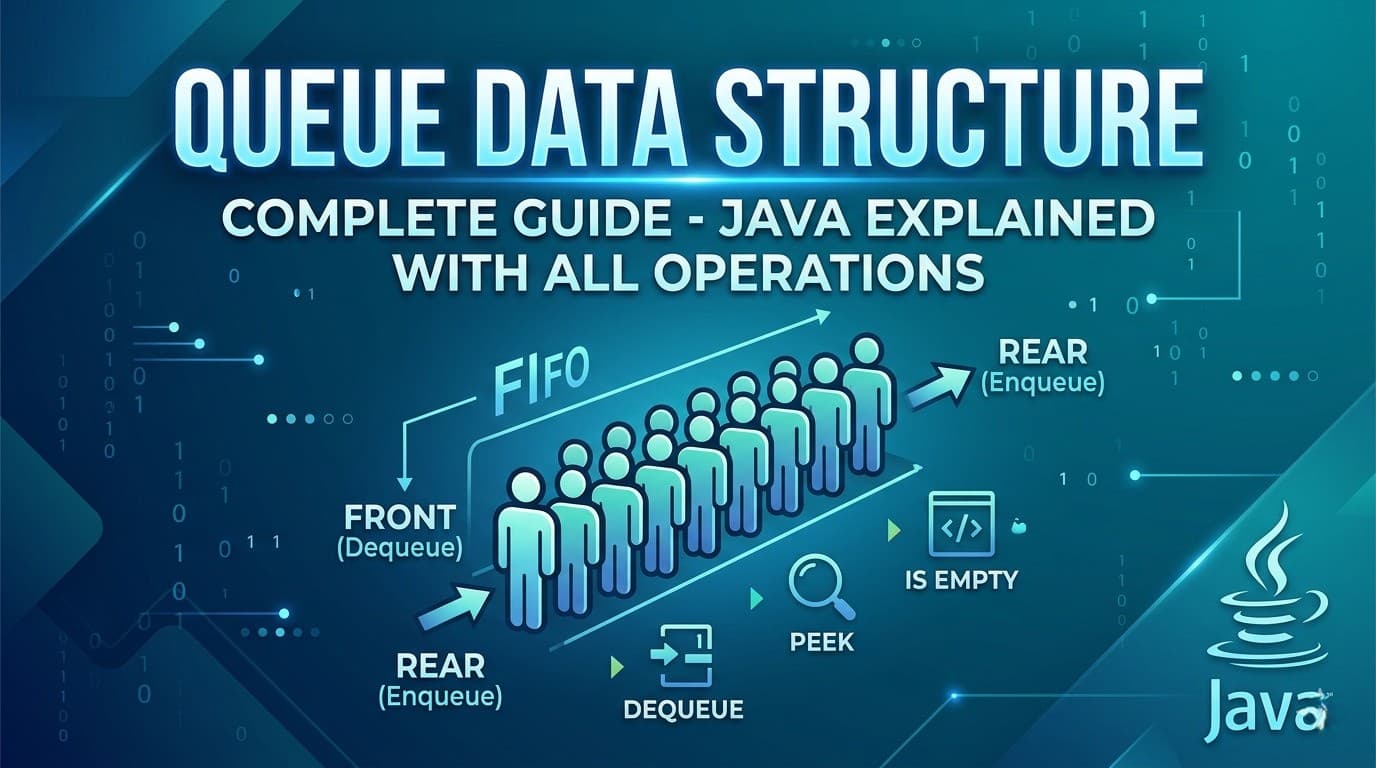
Why Queue is Used?
A queue follows:
This ensures:
- Nodes are processed in insertion order
- Parent nodes are processed before child nodes
- Levels are traversed correctly
Brute Force Intuition
One brute force idea is:
- Calculate height of tree
- Traverse each level separately
- Store nodes level by level
Brute Force Complexity
This approach becomes inefficient because:
- Each level traversal may revisit nodes
- Complexity may become:
for skewed trees.
Optimal BFS Intuition
Instead of traversing each level separately:
- Use a queue
- Process nodes level by level naturally
At every level:
- Store queue size
- Process exactly those many nodes
- Add children into queue
- Move to next level
Key BFS Observation
Before processing a level:
This tells us:
How many nodes belong to the current level.
BFS Algorithm
Steps
1. Initialize Queue
Insert root node.
2. Process Until Queue Becomes Empty
While queue is not empty:
- Find current level size
- Traverse current level
- Store values
- Push child nodes
3. Store Current Level
After processing one level:
Java BFS Solution
Dry Run
Input
Tree:
Initial Queue
Level 1
Queue size:
Process:
Add children:
Level result:
Queue now:
Level 2
Queue size:
Process:
Add children:
Level result:
Queue now:
Level 3
Queue size:
Process:
Level result:
Queue becomes empty.
Final Answer
Time Complexity Analysis
Time Complexity
Every node is visited exactly once.
Space Complexity
Queue may store an entire level of nodes.
DFS Alternative Approach
This problem can also be solved using DFS recursion.
Idea:
- Pass current level during recursion
- Create new list when level appears first time
- Add node into correct level list
Java DFS Solution
BFS vs DFS for Level Order Traversal
| Approach | Advantages | Disadvantages |
| BFS | Natural level traversal | Uses queue |
| DFS | Recursive solution | Slightly harder intuition |
Interview Explanation
In interviews, explain:
Level order traversal is a BFS problem because we process nodes level by level. A queue naturally supports this traversal order.
This demonstrates strong BFS understanding.
Common Mistakes
1. Forgetting Queue Size
Without storing:
levels cannot be separated correctly.
2. Using DFS Incorrectly
Simple DFS alone does not guarantee level ordering.
3. Forgetting Null Check
Always handle:
FAQs
Q1. Why is BFS preferred here?
Because BFS naturally processes nodes level by level.
Q2. Can this problem be solved recursively?
Yes.
Using DFS with level tracking.
Q3. What data structure is mainly used?
Queue.
Q4. Is Level Order Traversal important?
Yes.
It is one of the most frequently asked BFS tree problems.
Related Problems
After mastering this problem, practice:
- Binary Tree Zigzag Level Order Traversal
- Average of Levels in Binary Tree
- Right Side View of Binary Tree
- Binary Tree Vertical Order Traversal
- Maximum Depth of Binary Tree
Conclusion
LeetCode 102 is one of the most important BFS tree traversal problems.
It teaches:
- BFS traversal
- Queue usage
- Level-by-level processing
- Tree traversal fundamentals
The key idea is:
Use queue size to separate levels.
Once this intuition becomes clear, many BFS-based tree interview problems become much easier.