🔗 Try This Problem
Practice here:
https://leetcode.com/problems/maximum-twin-sum-of-a-linked-list/
📌 Problem Overview
You are given a linked list of even length.
Each node has a twin node defined as:
- Node at index
i→ Twin is at index(n - 1 - i)
👉 Example (n = 4):
- Index 0 ↔ Index 3
- Index 1 ↔ Index 2
The twin sum is:
🎯 Goal:
Return the maximum twin sum among all such pairs.
🧠 Understanding the Problem
Let’s take a simple example:
👉 So the answer is:
💡 Intuition — How to Think About This Problem
At first glance, it feels like we need to access:
- First node
- Last node
- Second node
- Second last node
👉 This naturally suggests:
- Two-directional access
- But linked lists don’t allow backward traversal
🤔 Possible Thinking Patterns
🔹 Idea 1: Use Extra Space
- Store values in an array
- Use two pointers from both ends
✔ Works
❌ But uses extra space O(n)
🔹 Idea 2: Work Directly on Linked List (Better)
We need a way to:
- Reach the middle
- Access second half in reverse order
👉 That leads to a powerful idea:
“What if we reverse the second half of the list?”
Now we can compare:
- First half (forward)
- Second half (also forward after reversal)
🎥 Visual Intuition (Your Explanation Video)
👉 In this section, focus only on:
- Concept
- Visualization
- Thought process
❌ Avoid code here
✔ Build understanding
⚙️ Optimized Approach (Step-by-Step)
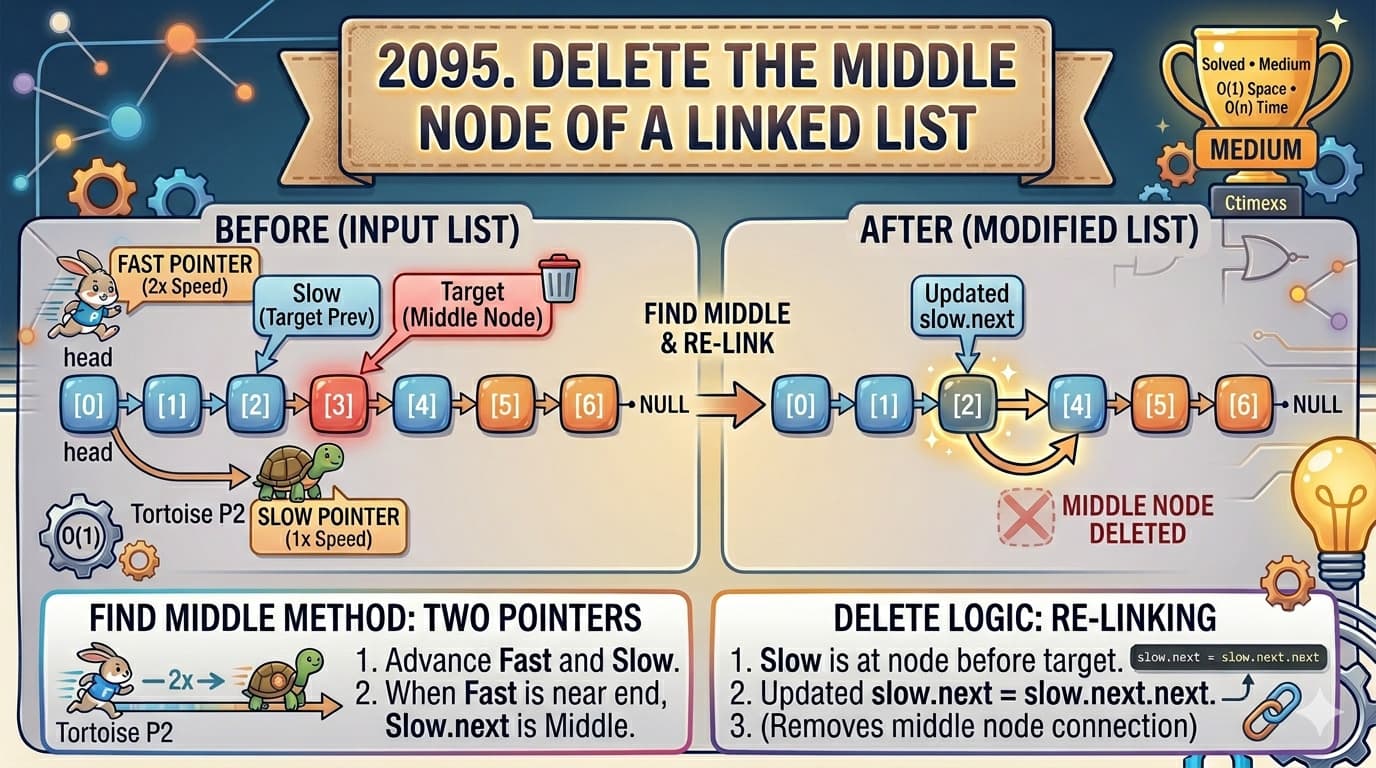
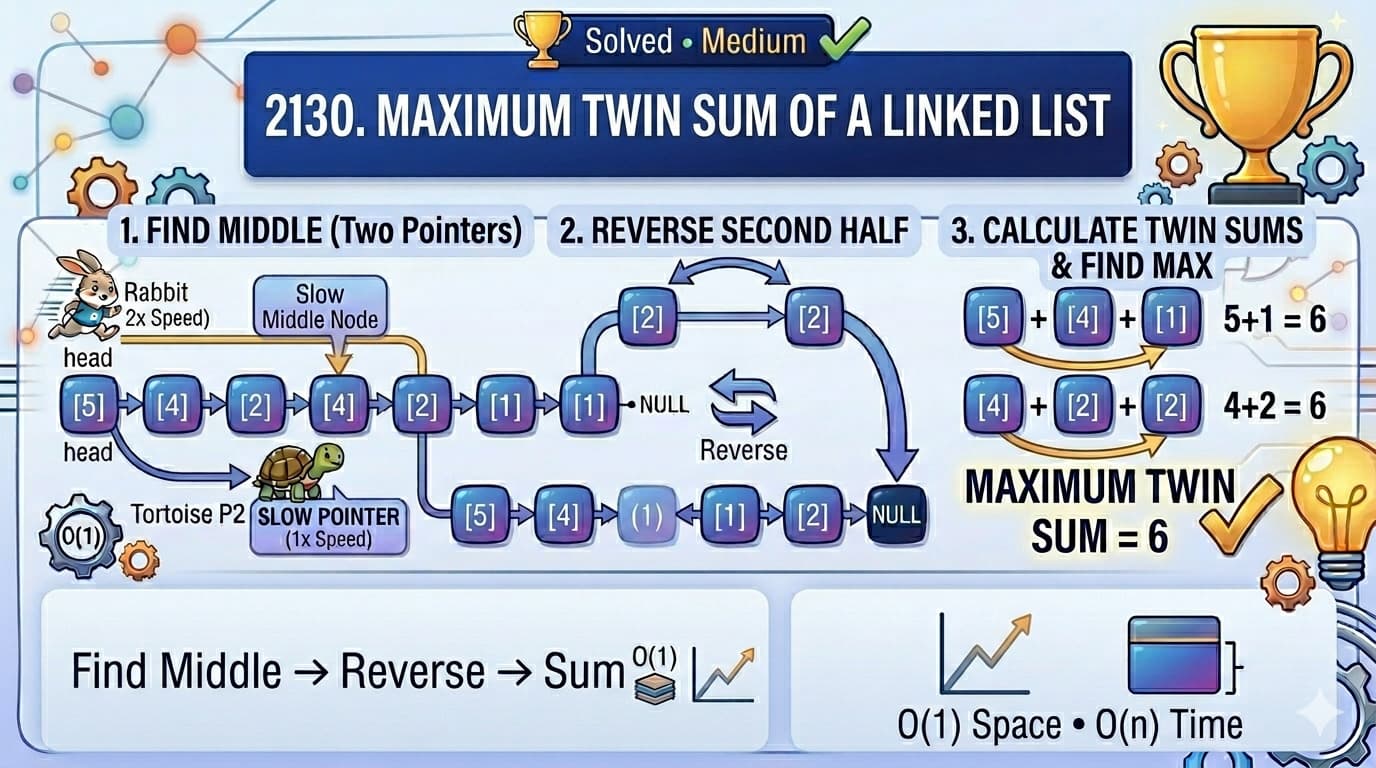
Step 1: Find Middle
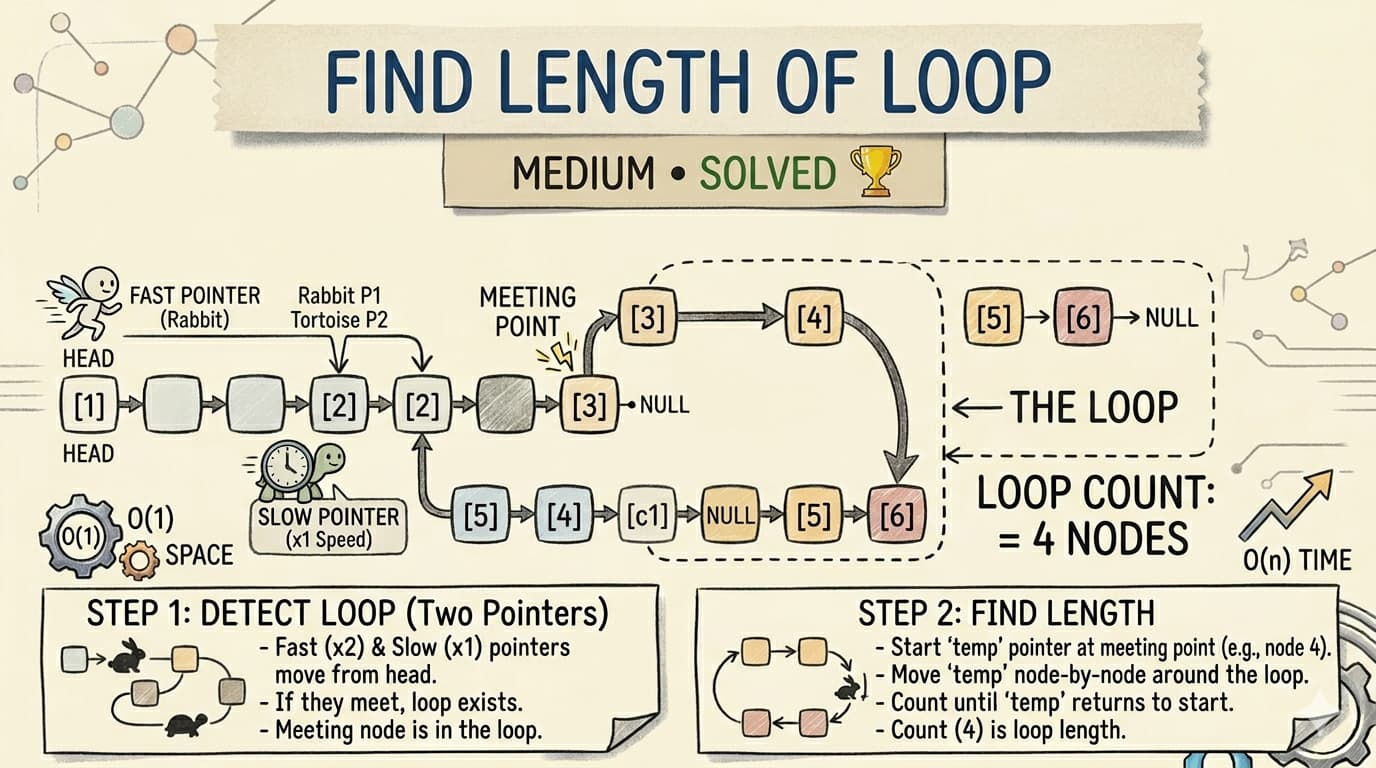
Use two pointers:
slow→ moves 1 stepfast→ moves 2 steps
👉 When fast reaches end → slow is at middle
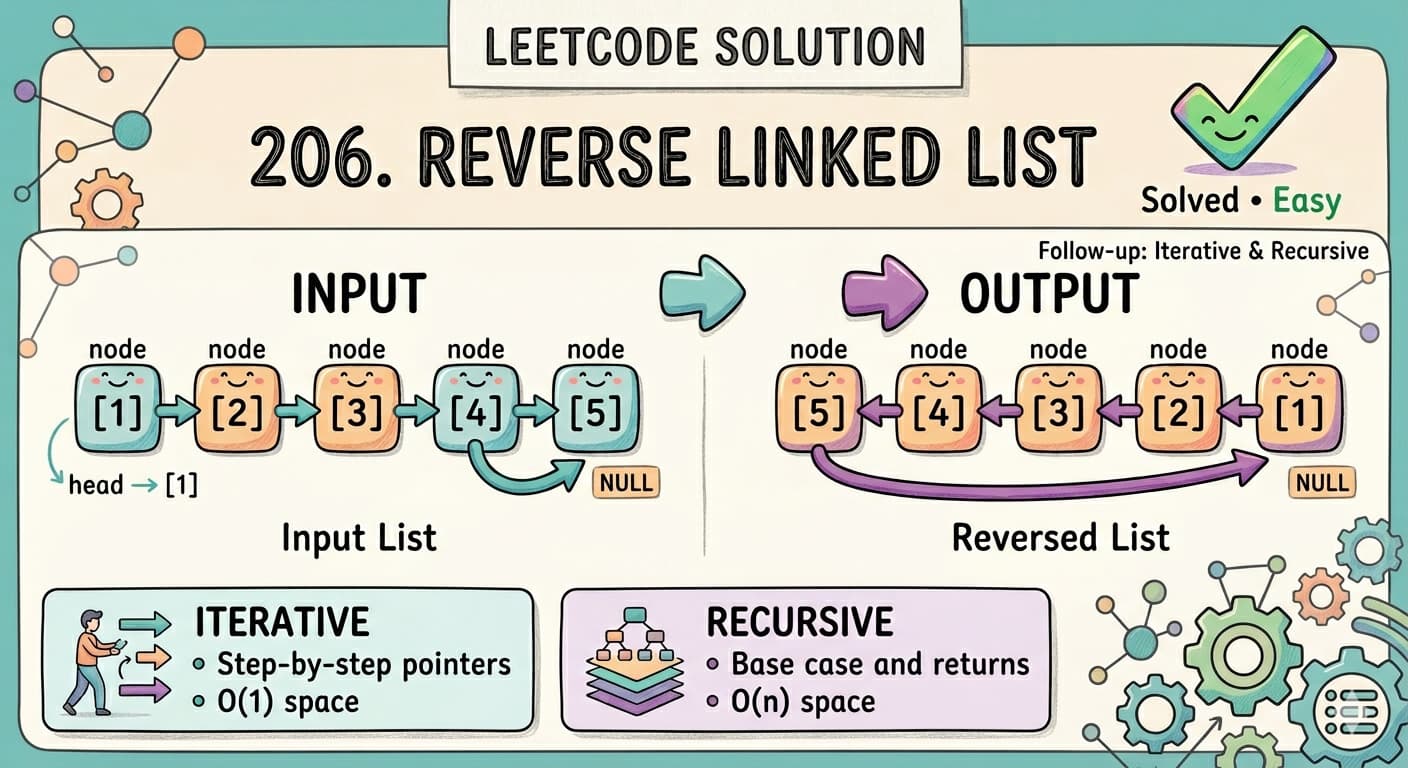
Step 2: Reverse Second Half
Start from:
Reverse the list
Step 3: Compare Twin Pairs
Now:
- One pointer → start of list
- One pointer → start of reversed half
Calculate:
Track maximum
🧪 Dry Run
Example:
Step 1: Find Middle
Step 2: Reverse Second Half
Step 3: Compare
✅ Maximum = 6
💻 Optimized Code (Java)
⏱️ Complexity Analysis
| Type | Value |
| Time Complexity | O(n) |
| Space Complexity | O(1) |
🧩 Key Takeaways
- Linked list problems often require restructuring instead of extra space
- Reversing half is a powerful trick
- Fast & slow pointer is essential for mid-finding
🏁 Final Thoughts
This problem is a perfect example of:
- Combining multiple concepts
- Optimizing space
- Thinking beyond direct access
👉 Once you understand this pattern, many linked list problems become easier.