🚀 Try the Problem
Practice here:
https://leetcode.com/problems/intersection-of-two-linked-lists/
🤔 Let’s Start With a Thought
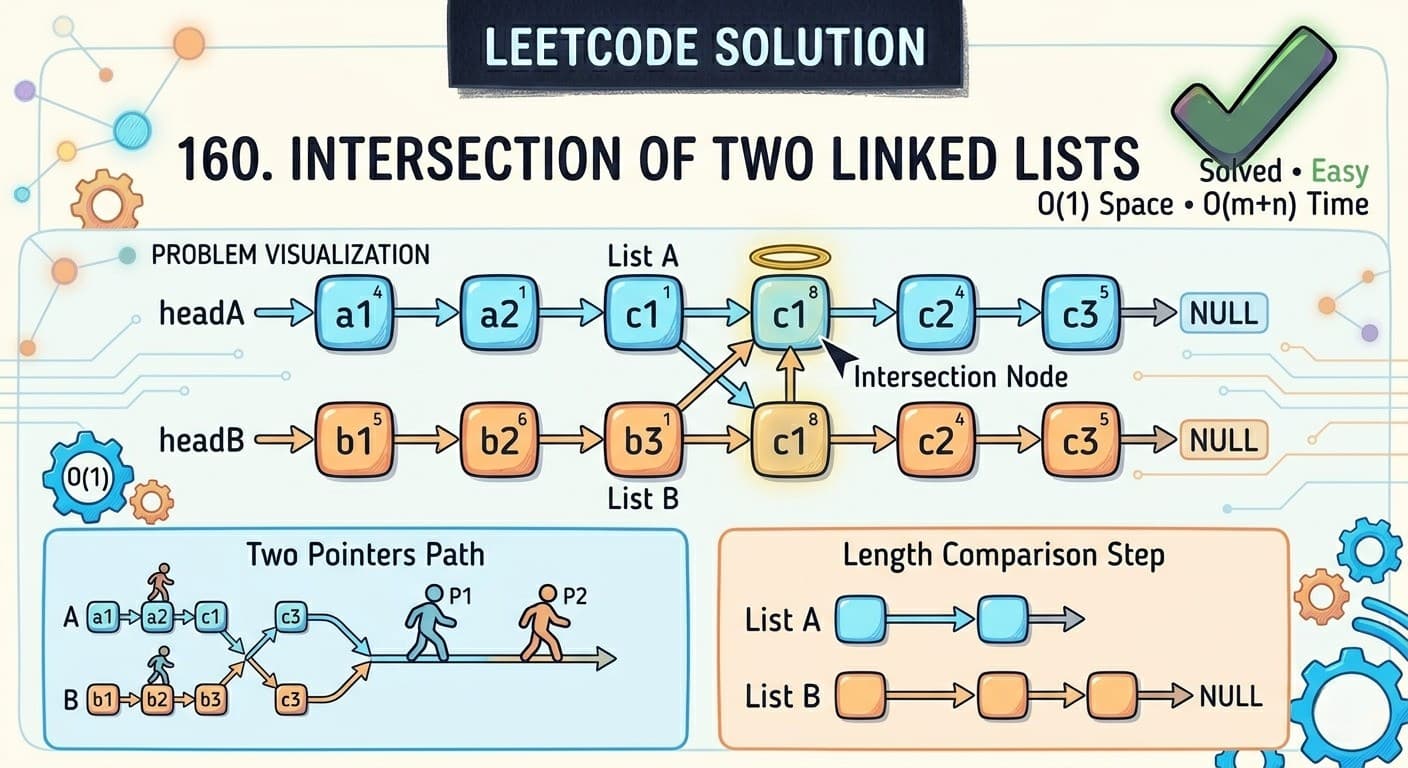
Imagine two roads:
At some point… both roads merge into one.
👉 That merging point is the intersection node
🧠 Problem in Simple Words
You are given:
- Head of List A
- Head of List B
👉 Find the node where both linked lists intersect
👉 If no intersection exists → return null
⚠️ Important Clarification
👉 Intersection means:
NOT:
📌 Example Insight
Even though both lists have 2 and 4:
👉 They intersect ONLY if they point to the same node in memory
📦 Constraints
🔍 First Thought (Brute Force)
Idea
For every node in List A:
👉 Traverse entire List B and check if nodes match
Complexity
Too slow.
🧩 Better Approach: Length Difference Method
Idea
- Find length of both lists
- Move the longer list ahead by the difference
- Now traverse both together
Why This Works
👉 After skipping extra nodes, both pointers are equally far from intersection
Complexity
🚀 Optimal Approach: Two Pointer Switching Trick
Now comes the most beautiful trick 🔥
🧠 Core Idea
We use two pointers:
🎯 The Magic Trick
👉 When a pointer reaches end → switch it to the other list
🔄 Visualization
Let’s say:
Pointer paths:
So both travel:
💡 Why They Meet
👉 If intersection exists → they meet at intersection
👉 If not → both reach null at same time
🔥 Step-by-Step Example
Iteration:
👉 They meet at 8
💻 Clean Java Code (Optimal Solution)
⏱️ Complexity
Time Complexity
Space Complexity
⚖️ Approach Comparison
| Approach | Time | Space | Notes |
| Brute Force | O(m*n) | O(1) | Too slow |
| Length Difference | O(m+n) | O(1) | Good |
| Two Pointer Switch | O(m+n) | O(1) | Best & elegant |
❌ Common Mistakes
- Comparing values instead of nodes ❌
- Forgetting to switch lists
- Not handling
nullcorrectly - Assuming intersection always exists
🔥 Interview Insight
This is one of the most clever pointer problems.
It teaches:
👉 How to equalize paths without extra memory
👉 How pointer switching solves alignment problems
🧠 Final Thought
At first, this trick feels like magic…
But actually it’s just:
Equalizing path lengths
🚀 Conclusion
The Intersection of Two Linked Lists problem is a perfect example of:
- Smart thinking > brute force
- Clean logic > complex code
👉 Tip: Whenever two lists need alignment, think:
"Can I make both pointers travel equal distance?"
That’s where the magic begins ✨