LeetCode 124: Binary Tree Maximum Path Sum – Java DFS Solution Explained
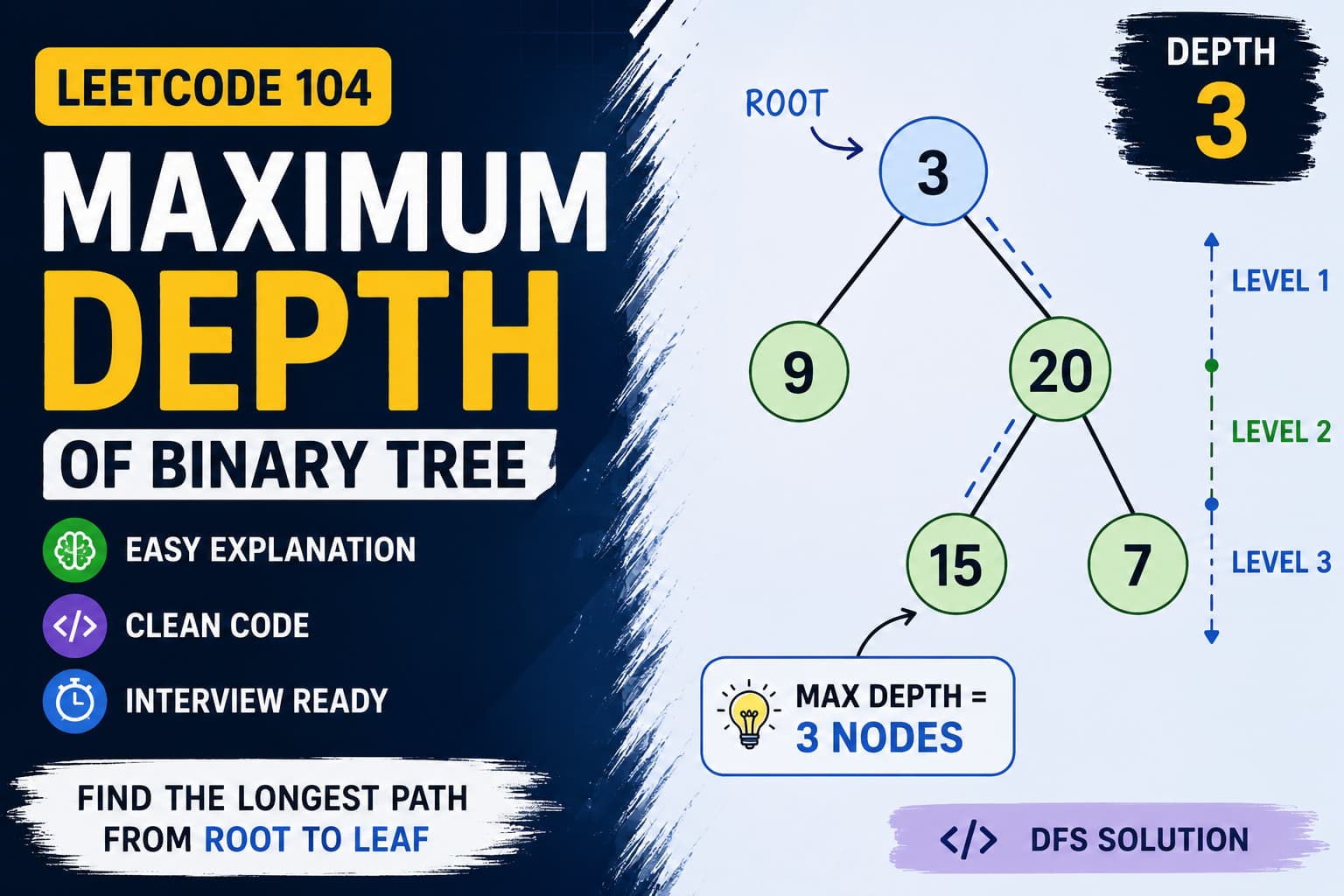
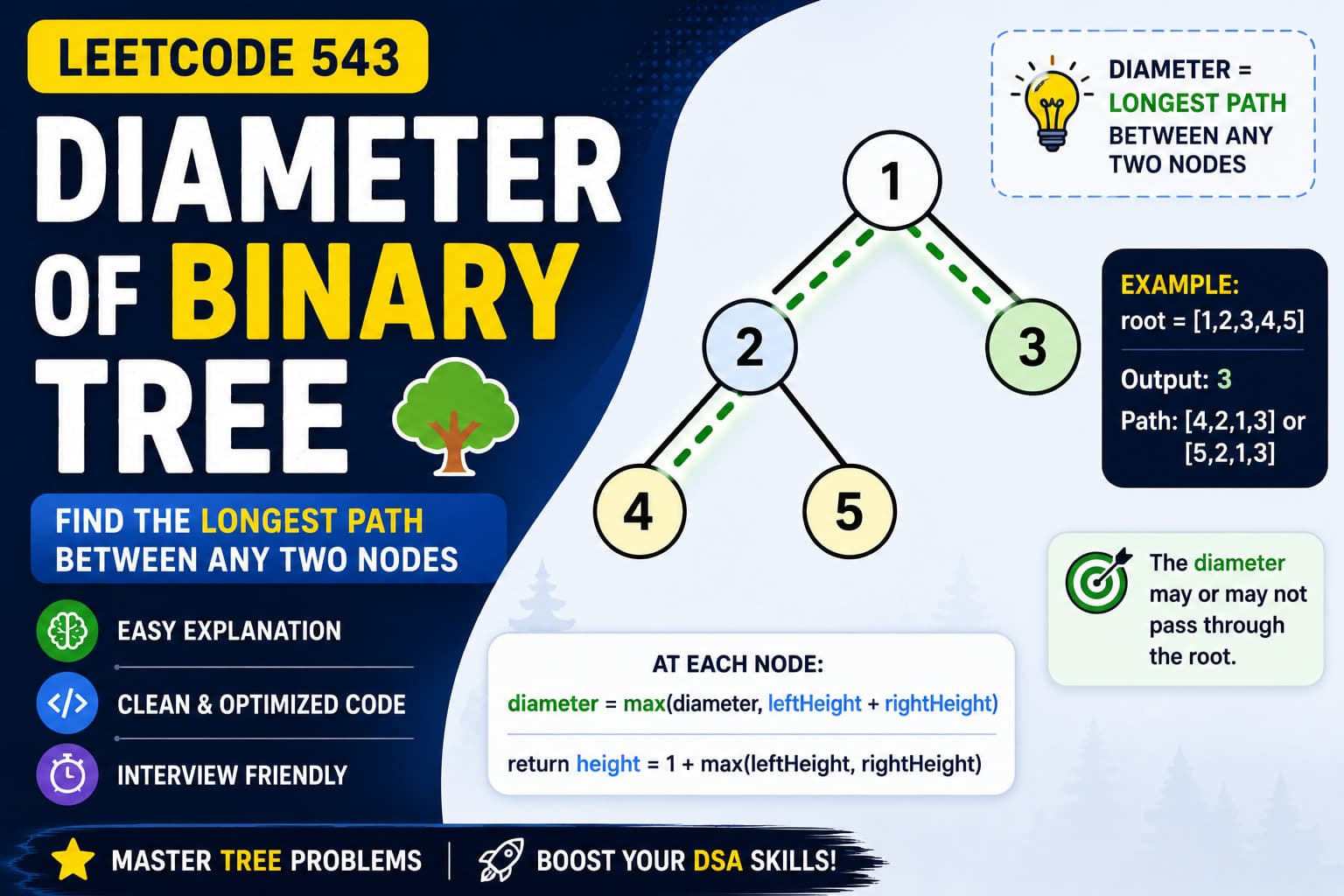
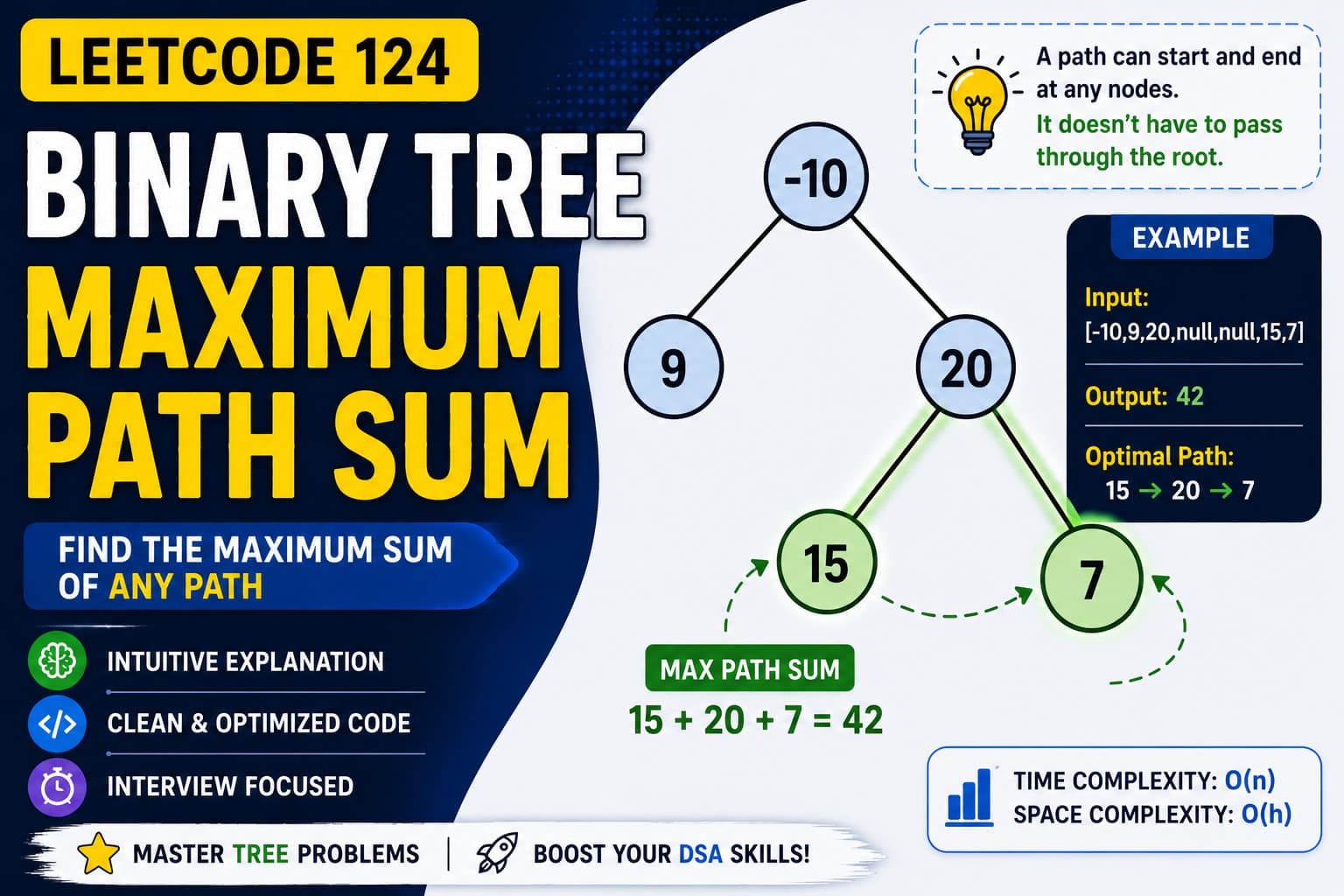
IntroductionLeetCode 124 – Binary Tree Maximum Path Sum is one of the most important and frequently asked hard-level binary tree interview problems.This problem teaches:Depth First Search (DFS)Bottom-up recursionTree Dynamic ProgrammingRecursive optimizationGlobal answer trackingIt is considered a classic interview problem because it combines:Tree traversalRecursive decision makingPath optimizationNegative value handlingMastering this problem helps in understanding advanced binary tree patterns used in:Diameter problemsTree DPMaximum path problemsGraph recursion problemsProblem Link🔗 https://leetcode.com/problems/binary-tree-maximum-path-sum/Problem StatementGiven the root of a binary tree:Return:Maximum path sum of any non-empty pathA path:Can start from any nodeCan end at any nodeMust follow parent-child connectionsCannot visit a node more than onceImportant:Path does NOT need to pass through rootExample 1Inputroot = [1,2,3]Tree: 1 / \ 2 3Output6Explanation:Best path:2 → 1 → 3Path sum:2 + 1 + 3 = 6Example 2Inputroot = [-10,9,20,null,null,15,7]Tree: -10 / \ 9 20 / \ 15 7Output42Explanation:Best path:15 → 20 → 7Sum:15 + 20 + 7 = 42Key ObservationAt every node:We have two important possibilities.Possibility 1Path continues upward to parent.In this case:We can choose only:ONE sidebecause path cannot split upward.Return value becomes:node + max(left, right)Possibility 2Current node becomes:Highest point of pathThen we can use:left + node + rightThis candidate updates global maximum answer.Core Recursive IdeaAt every node:Calculate left maximum contributionCalculate right maximum contributionIgnore negative pathsUpdate global answerReturn best single-side path upwardWhy Ignore Negative Paths?Negative paths reduce total sum.So:Math.max(path, 0)ensures:Negative contribution is discardedOnly profitable paths are consideredThis is the most important optimization.Your Java Solutionclass Solution { int max = Integer.MIN_VALUE; public int solve(TreeNode roo) { if(roo == null) return 0; int left = Math.max(solve(roo.left), 0); int right = Math.max(solve(roo.right), 0); max = Math.max(max, roo.val + left + right); return roo.val + Math.max(left, right); } public int maxPathSum(TreeNode root) { solve(root); return max; }}Why This WorksFor every node:We calculate:Best path passing through current nodewhich is:left + node + rightThis path may become global maximum.But while returning upward:We can only choose:one directionbecause paths cannot split.Dry RunInput -10 / \ 9 20 / \ 15 7Step 1Leaf nodes:9 → return 915 → return 157 → return 7Step 2At node:20Left:15Right:7Current best path:15 + 20 + 7 = 42Update:max = 42Return upward:20 + max(15,7)= 35Step 3At node:-10Left:9Right:35Candidate:9 + (-10) + 35 = 34Global maximum remains:42Final Answer42Recursive Visualizationsolve(-10) ├── solve(9) │ └── solve(20) ├── solve(15) └── solve(7)Global maximum gets updated during return phase.Brute Force ApproachA brute force approach would:Generate all possible pathsCalculate sumsTrack maximumBut number of paths becomes extremely large.This is inefficient.Brute Force ComplexityTime ComplexityCan become:O(N²)or worse depending on implementation.Optimized DFS ComplexityTime ComplexityO(N)because every node is visited once.Space ComplexityO(H)where:H = height of treeWorst case:O(N)for skewed tree.Important InsightTwo values exist at every node.1. Value Returned UpwardOnly one side allowed:node + max(left, right)2. Value Used for Global MaximumBoth sides allowed:left + node + rightThis distinction is the heart of the problem.Interview ExplanationIn interviews, explain:Every node acts as a potential highest point of a path. We compute the best path through that node while recursively returning the best single-side contribution upward.This demonstrates:Advanced DFS understandingTree DP conceptsRecursive optimizationHandling negative pathsCommon Mistakes1. Returning Both Sides UpwardIncorrect:left + node + rightA path cannot branch upward.2. Forgetting Negative Path HandlingAlways use:Math.max(value, 0)3. Assuming Path Must Pass RootThe path can exist entirely inside a subtree.4. Not Using Global VariableMaximum path may occur anywhere.FAQsQ1. Does path need to start from root?No.It can start and end anywhere.Q2. Why ignore negative sums?Negative paths reduce overall answer.Q3. Why can we return only one side?Because a path moving upward cannot split into two directions.Q4. Is this problem important for interviews?Extremely important.It is one of the most famous hard-level tree problems.Related ProblemsAfter mastering this problem, practice:Diameter of Binary TreeBalanced Binary TreeMaximum Depth of Binary TreeConclusionLeetCode 124 is one of the best problems for learning advanced binary tree recursion.It teaches:DFS optimizationTree dynamic programmingRecursive decision makingNegative path handlingGlobal answer trackingThe key insight is:Every node can become the highest point of a maximum path.Once this recursive pattern becomes clear, many advanced tree and graph problems become much easier to solve.